How Healthcare Brands Can Use AI Without Losing Patient Trust
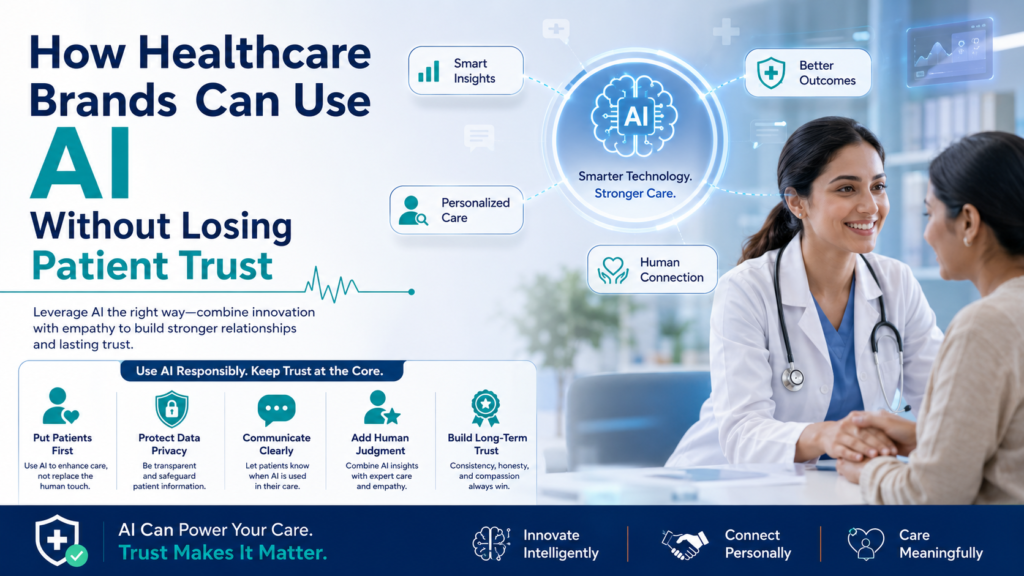
How Healthcare Brands Can Use AI Without Losing Patient Trust | Minmini Digital Marketing Healthcare AI Marketing · 2026 Edition How Healthcare BrandsCan Use AI WithoutLosing Patient Trust AI is reshaping how hospitals connect with patients—but in healthcare, trust is everything. The future isn’t AI versus humans. It’s AI working alongside humans to create content that is accurate, empathetic, and credible. 10 Min Read Expert-Reviewed Minmini Digital Marketing Scroll to explore The Core Challenge The Question Every HospitalMust Answer AI has become one of the most transformative technologies in digital marketing. From generating blog ideas to writing social media captions, analyzing SEO keywords, and personalizing patient communication—AI is reshaping how healthcare brands connect with their audiences. But there’s a critical question that no hospital can afford to ignore. ” Can we use AI without losing the trust of our patients? In healthcare, trust is everything. Patients don’t choose a hospital based on advertisements alone—they choose providers they believe are knowledgeable, ethical, compassionate, and reliable. While AI can accelerate content production, it cannot replace medical expertise, empathy, or human judgment. The answer to this question is yes—but only when AI is used responsibly. ✓ Yes — when used responsibly, AI strengthens trust, not weakens it AI Reshaping HealthcareMarketing in 2026 40+ Hospital ClientsAcross Tamil Nadu 11+ Years of HealthcareDigital Marketing 0% AI Content PublishedWithout Expert Review Smart Deployment Where AI Adds theMost Value Healthcare brands should use AI to improve productivity—not replace expertise. Used strategically, AI accelerates every stage of content marketing while keeping medical professionals firmly in control of accuracy and quality. 01 Research & Topic Discovery AI quickly identifies trending healthcare topics, frequently asked patient questions, and emerging health concerns—helping teams plan relevant content calendars more efficiently. Seasonal opportunities like dengue awareness, monsoon health tips, or women’s health campaigns become easy to anticipate. Trending Topics Patient Questions Content Calendar 02 Content Outlines & First Drafts Creating the first draft is often the most time-consuming part of writing. AI can generate blog structures, article introductions, FAQ sections, social media captions, and video scripts—which healthcare experts then refine with medical accuracy, local context, and brand personality. Blog Drafts FAQs Video Scripts 03 SEO & Keyword Mapping AI excels at identifying search intent and organizing keywords. It helps marketers find high-volume healthcare keywords, suggest related questions, build topic clusters, improve internal linking, and optimize headings—improving search visibility while ensuring content remains relevant to patient needs. Keyword Research Topic Clusters Metadata 04 Content Repurposing One doctor interview can become multiple content assets. AI can transform a single source into blog articles, Instagram captions, LinkedIn posts, YouTube descriptions, email newsletters, patient FAQs, and short video scripts—saving time while maintaining consistency across platforms. Multi-Platform Time-Saving Consistency 05 Translation & Localization Healthcare organizations often serve multilingual communities. AI can assist in translating educational content into regional languages, making healthcare information more accessible. However, human review is essential to ensure medical terminology and cultural nuances are correctly conveyed. Tamil Regional Languages Accessibility “The future of healthcare marketing is not about AI versus humans—it’s about AI working alongside humans to deliver content that is accurate, empathetic, and trustworthy.” — Minmini Digital Marketing, Healthcare AI Report 2026 Knowing the Boundary AI is Powerful — ButHumans Are Irreplaceable AI is a highly capable research assistant. It can gather information, organize ideas, and draft content—but the final responsibility always belongs to qualified healthcare professionals. Understanding what AI does well versus what only humans can do is the foundation of responsible healthcare marketing. 🤖 What AI Does Well Generates blog outlines and first drafts quickly Performs keyword research and SEO mapping at scale Repurposes one piece of content across many platforms Identifies trending patient questions and health topics Translates content into multiple regional languages Summarizes lengthy medical research into plain language Personalizes email campaigns based on audience segments Analyzes content performance and audience behavior 👨⚕️ What Only Humans Provide Clinical judgment and real medical decision-making Years of patient interaction and practical experience Empathy and genuine emotional connection with patients Ethical oversight of health claims and medical accuracy Cultural and contextual understanding of local patients Authentic patient stories, testimonials, and real outcomes Compliance review for healthcare marketing regulations Brand personality, voice, and community trust-building The Right Process Building a Human + AI Workflow The most successful healthcare brands use AI as part of a structured content process. This collaborative workflow combines the efficiency of AI with the credibility of human expertise—at every stage. 🔍 Step 01 AI for Research Use AI to gather trending topics, patient questions, seasonal health concerns, and keyword opportunities relevant to your hospital’s specialties and the communities you serve across Tamil Nadu. ✏️ Step 02 AI for Drafting Generate outlines, summaries, article introductions, FAQ sections, and first drafts using AI. This is where time is saved—not where the process ends. The draft is a starting point, never the final product. ⚕️ Step 03 — Critical Expert Medical Review Doctors or certified medical reviewers verify every medical statement, statistic, treatment recommendation, and health claim. This step is non-negotiable. No AI-assisted content reaches publication without qualified human sign-off. 🎨 Step 04 Brand Voice & Authenticity Marketing teams add the organization’s unique tone, real patient stories (with consent), local context, community references, and the human warmth that only genuine storytelling can provide. ✅ Step 05 Final Quality Check Ensure the content is accurate, engaging, compliant with healthcare marketing regulations, and fully aligned with the hospital’s values and patient-first communication standards before publishing. Watch Out For The Risks ofOver-Automation Many organizations make the mistake of publishing AI-generated content without sufficient human review. Healthcare marketing should inform, educate, and reassure—not simply fill a website with words. These are the risks that damage patient trust most. 📄 Generic, Hollow Articles AI without human editing produces content that feels templated and interchangeable—patients recognize it immediately, and it erodes brand credibility. 🔁 Repetitive Messaging Over-reliance on AI leads to the same ideas, phrases, and structures appearing repeatedly across a hospital’s website and social channels. ⚠️ Inaccurate