

ChatGPT Astra 6 Update: GPT-6 Astra Features & Guide
ChatGPT Astra 6 Update: GPT-6 Astra Features & Guide

ChatGPT Astra 6 Update: GPT-6 Astra Features & Guide
CEO Personal Branding: 10 Powerful Strategies That Transform Founders into Industry Influencers CEO Personal Branding CEO Personal Branding: 10 Proven Strategies That Transform Founders into Unstoppable Influencers CEO personal branding is no longer optional — it is one of the most transformative business strategies available to founders and executives today. These 10 proven CEO personal branding strategies build trust, attract elite talent, generate qualified leads, and create lasting industry influence that compounds over time. CEO Personal Branding 15 Min Read · 1,800+ Words Founder-Led Marketing Scroll to explore Table of Contents What You Will Learn About CEO Personal Branding 01 What Is CEO Personal Branding? 02 People Trust People, Not Logos 03 The Founder as a Media Channel 04 Building CEO Thought Leadership 05 CEO Brand Strengthens Company Brand 06 Attracting Talent & Opportunity 07 Social Media Strategy by Platform 08 How to Build Your Personal Brand 09 Measuring Success & ROI 10 The Future Is Founder-Led The Shift Is Happening Now The Era of Invisible Leadership Is Over — CEO Personal Branding Has Arrived There was a time when CEOs were expected to remain behind the scenes. The company had a brand. The product had a brand. The CEO simply managed the organisation, spoke at annual meetings, and occasionally appeared in the media. That model is rapidly changing. Today, some of the most recognisable businesses are strongly connected to the personalities, ideas, and values of their founders — and a strong CEO personal brand has become one of the most powerful business assets a leader can build. For a deeper look at how digital marketing strategies intersect with executive visibility, see our in-depth guide for healthcare and service businesses. Foundation What Is CEO Personal Branding? Defining CEO Personal Branding for Executive Leaders CEO personal branding is the process of intentionally building and communicating the reputation, expertise, values, personality, and perspective of a business leader. Effective CEO personal branding answers the questions that audiences increasingly ask before they decide to trust, buy from, or work with a company. Key Questions Your CEO Personal Branding Strategy Must Answer What does this leader stand for? What expertise do they hold? What problems do they understand deeply? Why should people trust their opinions? What makes their leadership approach different from every other executive in their industry? Personal branding for CEOs does not mean creating an artificial personality for social media. The strongest CEO personal brands amplify qualities that already exist. A founder may be known for bold innovation. Another CEO may build recognition for exceptional employee culture. A healthcare entrepreneur might construct authority by educating audiences about patient experience. A marketing agency founder may discuss branding, digital transformation, and entrepreneurship. If your business serves specialised sectors, learn more about founder branding strategies for digital agencies on our resource hub. “The objective of CEO personal branding is to create a consistent association between the leader and specific ideas, values, and expertise — and over time, that recognition becomes a powerful, compounding business asset.” For a deeper understanding of how CEO personal branding intersects with business growth, resources from Harvard Business Review’s Leadership section and Forbes Leadership provide excellent industry perspectives on executive visibility. Your CEO Personal Brand Answers: What do you stand for? · What expertise do you hold? · Why should people trust you? CEO Personal Branding Framework 3 Pillars of Executive Brand Strategy Reputation · Authority · Visibility Used by 78% of top-ranked global CEOs 82% of buyers research a company’s leadership before making a decision 7× more engagement on posts from individuals vs. brand accounts 60% of top talent evaluate a CEO’s online presence before applying 3× higher inbound leads for businesses with visible executive brands Strategy 01 People Trust People, Not Logos — CEO Personal Branding Builds Human Connection Why Human Trust Is the Foundation of CEO Personal Branding Trust is one of the most significant drivers behind the explosive growth of CEO personal branding today. Companies naturally communicate in a polished and controlled style — important for professionalism, but corporate communication can sometimes feel distant and impersonal. A leader sharing experiences personally creates a fundamentally different emotional connection with every audience the business serves. CEO Personal Branding vs. Corporate Communication The Trust Gap — Why Leaders Must Speak Directly Audiences form emotional connections with individuals 4× faster than with corporate brand voices alone Source: Edelman Trust Barometer What CEO Personal Branding Communicates That Corporate Accounts Cannot Why the Company Exists When a CEO shares the origin story — the early struggles, the real motivation, the defining moment — customers develop a far deeper connection with the mission than any advertisement could create. CEO personal branding makes this story credible and personal. Lessons from Failure Sharing mistakes openly signals that the leader is confident, self-aware, and committed to continuous learning — qualities audiences consistently associate with trustworthy, credible leadership through genuine executive personal branding. Difficult Decisions Transparency about hard choices makes the organisation feel human, accessible, and principled — qualities that are particularly valuable during periods of market uncertainty or industry disruption when CEO personal branding matters most. Leadership Philosophy When a CEO articulates how they think about leadership, culture, and purpose, employees, partners, and investors all gain essential clarity on what guides every decision within the organisation. Strategy 02 CEO Personal Branding Turns the Founder Into the Most Powerful Media Channel Why Founder-Led CEO Personal Branding Outperforms Paid Advertising Businesses invest significantly in earning attention — through advertisements, websites, newsletters, blogs, social media content, and public relations. A strong CEO personal brand can support all of these activities without the same recurring cost, making CEO personal branding one of the highest-ROI strategies available for founders and business leaders today. Imagine a CEO with a highly engaged professional audience built through consistent personal branding. When the company launches a product, the CEO can explain why it was created. When the business enters a new market, the founder can share the thinking behind that strategy. When the industry shifts, the
Healthcare Video Marketing Trends 2026 | Hospitals & Doctors Top Overview 12 Trends Short-Form Doctor-Led AI & Review Video SEO Languages Metrics 2026 Plan FAQ Conclusion Healthcare Digital Marketing · 2026 Edition Healthcare Video Marketing Trends 2026 Discover how hospitals and doctors can educate patients, build trust and increase appointments through strategic video marketing in India’s rapidly evolving mobile-first digital landscape. 18 min read Hospitals & Doctors India Focus 0% Indian users watch video daily 0 Key trends covered 0 Languages on YouTube auto-dub 0% Viewers watch live content daily Scroll to explore The Shift in Healthcare Video Has Become the Patient’s First Consultation Patients no longer depend only on hospital websites, newspaper advertisements or word-of-mouth recommendations when choosing a doctor. They watch Instagram Reels, YouTube Shorts, patient education videos, doctor interviews, treatment explainers and hospital facility tours before making an appointment. In 2026, video is not simply an optional component of healthcare marketing. It has become one of the most effective ways for hospitals and doctors to communicate expertise, reduce patient anxiety and build trust before a consultation takes place. 97% of surveyed Indian users watched video on Meta platforms daily as of June 2026, spanning both urban and rural audiences. Mobile-First India’s smartphone-driven market means short-form vertical videos are the primary discovery tool for healthcare information. Trust-Led Healthcare organisations must handle video differently — content must be accurate, ethical, understandable and respectful of patient privacy. 2026 Trend Report 12 Healthcare Video Marketing Trends Each trend reflects a larger change in how patients search for information, evaluate doctors and make healthcare decisions in today’s digital-first world. 01 Short-Form Videos Will Drive Patient Discovery Instagram Reels, Facebook Reels and YouTube Shorts allow hospitals and doctors to communicate one useful idea within seconds, matching the questions patients already have — educational, relevant and easy to share. ↑ Discovery 02 Doctor-Led Content Will Outperform Generic Hospital Advertising Patients trust people more easily than buildings or equipment. Regular videos from doctors answer key patient questions: who will examine them, how the doctor communicates and whether the doctor is approachable. ↑ Trust 03 Educational Video Series Will Replace Random Posting Successful healthcare video marketing will depend on structured content series. A cardiology hospital could develop weekly myth-busting, doctor explanations, warning signs and monthly interviews — building authority systematically. ↑ Authority 04 AI-Assisted Production Will Rise but Medical Review Is Essential AI can generate topics, convert interviews into clips, create subtitles and translate scripts. However, the World Health Organization has warned that AI can accelerate persuasive health misinformation — every video must be reviewed by a qualified professional. ↑ Efficiency 05 Multilingual and Regional-Language Videos Will Expand Reach Healthcare communication is most effective when patients understand it comfortably. In India, this means creating videos in Tamil, Hindi, Telugu, Malayalam, Kannada, Bengali, Marathi and other regional languages — never publishing an automatic medical translation without expert verification. ↑ Reach 06 Video SEO Will Become Part of Healthcare Search Strategy Each important video needs a specific patient-focused title, clear description, accurate thumbnail, captions, written transcript, timestamps for longer videos and relevant appointment call to action. Google supports VideoObject structured data to help videos appear in key search moments. ↑ Search 07 Healthcare Content Will Be Optimised for Answer Engines Patients are increasingly using conversational AI search tools. Hospitals should create videos that answer one clear question at a time, with the answer appearing early — using natural patient language like “What causes frequent urination at night?” rather than generic titles. ↑ AI Search 08 Long-Form Videos Will Build Deeper Medical Authority A 20-minute doctor interview can become five short Reels, three quote videos, one website article, one patient FAQ page, several social posts and one email newsletter section. This content-repurposing model improves consistency and reduces production costs significantly. ↑ Depth 09 Live Video Will Strengthen Community Engagement YouTube reported that more than 30% of daily logged-in viewers watched live content in Q2 2025. Live Q&A sessions, health-awareness webinars and specialist discussions help hospitals interact with patients in real time — with careful moderation to avoid public individual diagnoses. ↑ Engagement 10 Patient Stories Will Focus on Consent and Authenticity Patient testimonials make healthcare communication more relatable, but must be handled ethically. Hospitals should obtain documented permission and must not create unrealistic treatment expectations. Authenticity matters more than dramatic storytelling — a respectful, truthful patient experience is more credible than an exaggerated success claim. ↑ Ethics 11 Accessible, Captioned and Silent-Friendly Videos Will Become Standard Many users watch social media videos without sound. Captions should be treated as a standard part of production rather than an optional addition. Healthcare videos require reviewed captions — a single error can change the meaning of a medicine name, measurement, diagnosis or instruction. ↑ Accessibility 12 Video Success Will Be Measured Beyond Views Hospitals should measure whether content supports meaningful patient actions: average viewing duration, website visits, appointment-page visits, calls, WhatsApp enquiries, direction requests and completed appointment forms. Different videos need different objectives — a specialist introduction video should generate appointments, not just views. ↑ ROI Trend 01 · Deep Dive Short-Form Videos: The Patient Discovery Engine Short-form vertical videos continue to dominate social media discovery. Instead of producing only long hospital advertisements, healthcare organisations can create short videos answering specific patient questions. However, short videos should not oversimplify serious conditions. Doctors must avoid presenting a 30-second video as a substitute for diagnosis. Recommended structure for a Healthcare Reel: Hook: “Do not ignore these three warning signs.” Education: Explain the signs in simple language. Context: Mention who may be at higher risk. Action: Tell viewers when to consult a doctor. Disclaimer: Clarify that the video provides general awareness, not an individual diagnosis. Dr @drprakashcardiology 🚨 3 Warning Signs You Should Never Ignore — Heart Attack vs Gastric Pain #HeartHealth #CardiologyTips #HealthAwareness 24.6K 1.2K 8.4K ▶ 1.8M Views 📅 47 Appointments this week Trend 02 · Deep Dive Doctor-Led Content Builds the Human Connection A hospital may have advanced infrastructure, but patients
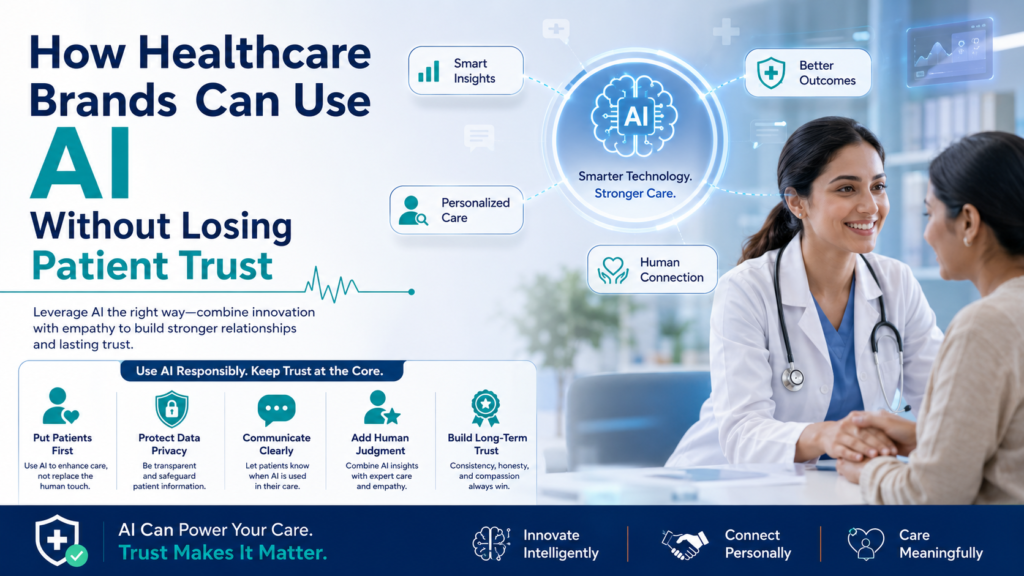
How Healthcare Brands Can Use AI Without Losing Patient Trust | Minmini Digital Marketing Healthcare AI Marketing · 2026 Edition How Healthcare BrandsCan Use AI WithoutLosing Patient Trust AI is reshaping how hospitals connect with patients—but in healthcare, trust is everything. The future isn’t AI versus humans. It’s AI working alongside humans to create content that is accurate, empathetic, and credible. 10 Min Read Expert-Reviewed Minmini Digital Marketing Scroll to explore The Core Challenge The Question Every HospitalMust Answer AI has become one of the most transformative technologies in digital marketing. From generating blog ideas to writing social media captions, analyzing SEO keywords, and personalizing patient communication—AI is reshaping how healthcare brands connect with their audiences. But there’s a critical question that no hospital can afford to ignore. ” Can we use AI without losing the trust of our patients? In healthcare, trust is everything. Patients don’t choose a hospital based on advertisements alone—they choose providers they believe are knowledgeable, ethical, compassionate, and reliable. While AI can accelerate content production, it cannot replace medical expertise, empathy, or human judgment. The answer to this question is yes—but only when AI is used responsibly. ✓ Yes — when used responsibly, AI strengthens trust, not weakens it AI Reshaping HealthcareMarketing in 2026 40+ Hospital ClientsAcross Tamil Nadu 11+ Years of HealthcareDigital Marketing 0% AI Content PublishedWithout Expert Review Smart Deployment Where AI Adds theMost Value Healthcare brands should use AI to improve productivity—not replace expertise. Used strategically, AI accelerates every stage of content marketing while keeping medical professionals firmly in control of accuracy and quality. 01 Research & Topic Discovery AI quickly identifies trending healthcare topics, frequently asked patient questions, and emerging health concerns—helping teams plan relevant content calendars more efficiently. Seasonal opportunities like dengue awareness, monsoon health tips, or women’s health campaigns become easy to anticipate. Trending Topics Patient Questions Content Calendar 02 Content Outlines & First Drafts Creating the first draft is often the most time-consuming part of writing. AI can generate blog structures, article introductions, FAQ sections, social media captions, and video scripts—which healthcare experts then refine with medical accuracy, local context, and brand personality. Blog Drafts FAQs Video Scripts 03 SEO & Keyword Mapping AI excels at identifying search intent and organizing keywords. It helps marketers find high-volume healthcare keywords, suggest related questions, build topic clusters, improve internal linking, and optimize headings—improving search visibility while ensuring content remains relevant to patient needs. Keyword Research Topic Clusters Metadata 04 Content Repurposing One doctor interview can become multiple content assets. AI can transform a single source into blog articles, Instagram captions, LinkedIn posts, YouTube descriptions, email newsletters, patient FAQs, and short video scripts—saving time while maintaining consistency across platforms. Multi-Platform Time-Saving Consistency 05 Translation & Localization Healthcare organizations often serve multilingual communities. AI can assist in translating educational content into regional languages, making healthcare information more accessible. However, human review is essential to ensure medical terminology and cultural nuances are correctly conveyed. Tamil Regional Languages Accessibility “The future of healthcare marketing is not about AI versus humans—it’s about AI working alongside humans to deliver content that is accurate, empathetic, and trustworthy.” — Minmini Digital Marketing, Healthcare AI Report 2026 Knowing the Boundary AI is Powerful — ButHumans Are Irreplaceable AI is a highly capable research assistant. It can gather information, organize ideas, and draft content—but the final responsibility always belongs to qualified healthcare professionals. Understanding what AI does well versus what only humans can do is the foundation of responsible healthcare marketing. 🤖 What AI Does Well Generates blog outlines and first drafts quickly Performs keyword research and SEO mapping at scale Repurposes one piece of content across many platforms Identifies trending patient questions and health topics Translates content into multiple regional languages Summarizes lengthy medical research into plain language Personalizes email campaigns based on audience segments Analyzes content performance and audience behavior 👨⚕️ What Only Humans Provide Clinical judgment and real medical decision-making Years of patient interaction and practical experience Empathy and genuine emotional connection with patients Ethical oversight of health claims and medical accuracy Cultural and contextual understanding of local patients Authentic patient stories, testimonials, and real outcomes Compliance review for healthcare marketing regulations Brand personality, voice, and community trust-building The Right Process Building a Human + AI Workflow The most successful healthcare brands use AI as part of a structured content process. This collaborative workflow combines the efficiency of AI with the credibility of human expertise—at every stage. 🔍 Step 01 AI for Research Use AI to gather trending topics, patient questions, seasonal health concerns, and keyword opportunities relevant to your hospital’s specialties and the communities you serve across Tamil Nadu. ✏️ Step 02 AI for Drafting Generate outlines, summaries, article introductions, FAQ sections, and first drafts using AI. This is where time is saved—not where the process ends. The draft is a starting point, never the final product. ⚕️ Step 03 — Critical Expert Medical Review Doctors or certified medical reviewers verify every medical statement, statistic, treatment recommendation, and health claim. This step is non-negotiable. No AI-assisted content reaches publication without qualified human sign-off. 🎨 Step 04 Brand Voice & Authenticity Marketing teams add the organization’s unique tone, real patient stories (with consent), local context, community references, and the human warmth that only genuine storytelling can provide. ✅ Step 05 Final Quality Check Ensure the content is accurate, engaging, compliant with healthcare marketing regulations, and fully aligned with the hospital’s values and patient-first communication standards before publishing. Watch Out For The Risks ofOver-Automation Many organizations make the mistake of publishing AI-generated content without sufficient human review. Healthcare marketing should inform, educate, and reassure—not simply fill a website with words. These are the risks that damage patient trust most. 📄 Generic, Hollow Articles AI without human editing produces content that feels templated and interchangeable—patients recognize it immediately, and it erodes brand credibility. 🔁 Repetitive Messaging Over-reliance on AI leads to the same ideas, phrases, and structures appearing repeatedly across a hospital’s website and social channels. ⚠️ Inaccurate
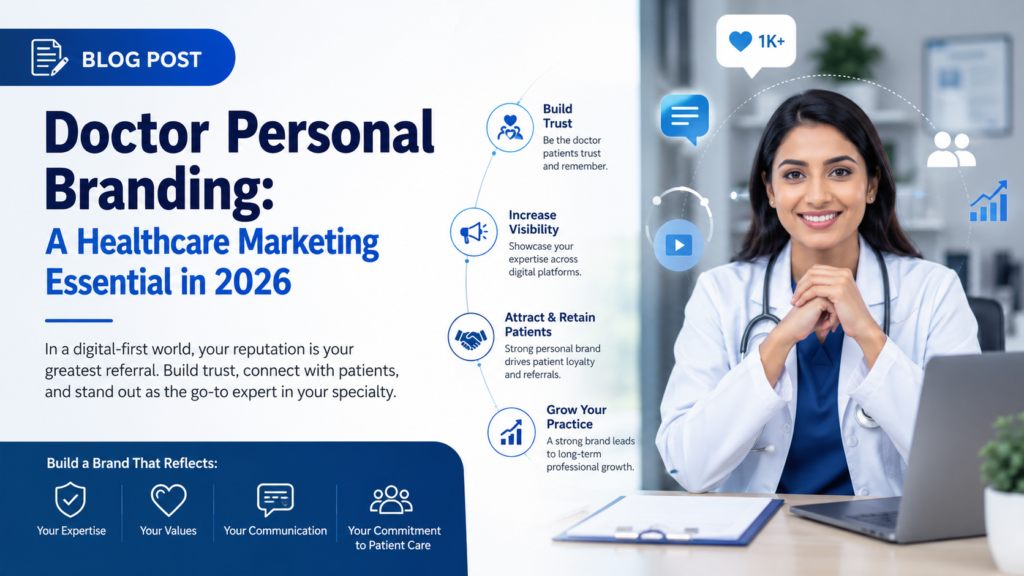
Doctor Personal Branding: A Healthcare Marketing Essential in 2026 Healthcare Digital Marketing · 2026 Doctor Personal Branding, the new front door to patient trust Patients no longer choose on a hospital’s name alone. They want to know the doctor, the expertise, and the care behind the white coat before they ever book. The shift Reputation now lives with the doctor, not only the building. This change has made doctor personal branding one of the most influential healthcare digital marketing strategies of 2026. A strong personal brand lets doctors showcase their medical expertise, values, and approach to patient care. By consistently sharing accurate, educational, and patient-friendly content, doctors establish themselves as trusted voices in their specialties. Over time this increases visibility, strengthens credibility, and helps patients feel more comfortable seeking care. “An authentic online presence answers the questions patients are already asking, and builds confidence before the first appointment.” Why it matters Patients research professionals online before they pick up the phone. They look for educational content, reviews, qualifications, and evidence of experience. A clear, authentic presence answers those questions and earns trust early. 01 Increased patient trust and credibility 02 Improved online visibility and search presence 03 Higher engagement across digital platforms 04 A stronger reputation in the local community 05 Better retention and referral opportunities The toolkit Six content formats that build a doctor’s brand. Each format does a different job, from explaining a condition to simply making the clinic feel less intimidating. Used together, they tell a complete, human story. Awareness 01 Health Awareness Videos Short, easy-to-understand videos that explain common diseases, symptoms, preventive measures, and treatment options, positioning doctors as reliable sources of medical information. Connection 02 Doctor Interviews Conversations where doctors discuss their specialty, care philosophy, emerging medical technologies, or common questions, helping patients connect with the person behind the profession. Myth vs Fact 03 Medical Myths vs. Facts Side-by-side content that compares misconceptions with evidence-based facts. Highly shareable, and a practical way to combat health misinformation in the community. Reels 04 Educational Reels Short-form videos covering practical tips, wellness advice, seasonal precautions, and healthy habits. They perform well on Instagram Reels, Facebook Reels, and YouTube Shorts. Live Q&A 05 Live Q&A Sessions Live sessions where patients ask general health questions. Interactive discussion drives engagement and credibility, while personalized medical advice is kept for private consultations. Behind the scenes 06 Behind-the-Scenes Clinic Content A glimpse into the clinic, the staff, the facilities, and how care is delivered. It makes healthcare feel approachable and eases anxiety for first-time patients. Do it responsibly Best practices that protect patients and the brand. Trust is the whole point, so the rules of medical communication come first, always. Share medically accurate, evidence-based information. Use clear, patient-friendly language instead of complex terminology. Maintain a consistent posting schedule. Protect privacy and get written consent before sharing testimonials or case studies. Avoid unrealistic treatment promises or guarantees. Engage professionally, and guide patients to consultations for personal advice. Patients choose the doctors they feel familiar with. Consistent educational content, transparent communication, and an approachable online presence strengthen the doctor–patient relationship, improve engagement, and support sustainable practice growth in an increasingly digital healthcare landscape. Build your doctor brand with Minmini
Digital Patient Journey — From Search to Appointment Healthcare Digital Insights — 2025 Digital PatientJourney From the first Google search to a confirmed appointment — every touchpoint shapes whether a patient chooses your clinic or your competitor’s. 77% Patients Start Online 10+ Journey Touchpoints 3× More Bookings via Digital 01Awareness 02Research 03Evaluation 04Trust 05Local Search 06Decision 07Booking 08Pre-Care 09In-Person 10Post-Care 00 Introduction The New Path to Your Clinic’s Door Today’s patients don’t walk in — they search, compare, evaluate, and decide entirely online before ever picking up the phone. The healthcare industry has undergone a remarkable transformation in recent years. Today’s patients no longer rely solely on word-of-mouth recommendations or nearby clinics when seeking medical care. Instead, they turn to digital platforms to search for symptoms, compare healthcare providers, read reviews, and book appointments online. This shift has created what is known as the Digital Patient Journey — the path a patient takes from the moment they recognize a health concern to the point of scheduling an appointment with a healthcare provider. Understanding this journey is crucial for hospitals, clinics, and healthcare professionals. Organizations that successfully optimize every stage can improve patient acquisition, increase trust, enhance patient experience, and ultimately drive better healthcare outcomes. 77% of patients use online search before booking a healthcare appointment. The clinic that shows up first, earns trust first — and wins the booking. — Digital Health Consumer Research 01 Stages 1–5 Discovery to Decision The first five stages determine whether a patient finds you — and whether they trust you enough to consider choosing you. 01 AwarenessRecognizing a Need Patients search symptoms before visiting any clinic. “Why do I have chest pain?” or “Best gynecologist near me” — this is where your content either shows up or loses the patient forever. Publish symptom guides and FAQs Create short health awareness videos Target condition-specific keywords 02 ResearchGathering Information Patients visit hospital websites, healthcare blogs, YouTube, and medical directories. Strong SEO ensures your organization appears when they search for specialist care. Optimize service pages for keywords Build mobile-friendly, fast websites Target local terms like “Best cardiologist in Madurai” 03 EvaluationComparing Providers Patients compare reviews, doctor profiles, website experience, and social proof. A poorly designed website or missing reviews will send them to your competitor. Build detailed doctor profile pages Showcase patient testimonials Maintain active social media presence 04 TrustBuilding Confidence Healthcare is deeply personal. Patients need reassurance — through educational content, transparent pricing, and responsive reputation management — before they commit. Publish doctor interview videos Be transparent about costs and insurance Respond professionally to all reviews 05 Local SearchNear-Me Discovery “Hospital near me.” “Orthopedic doctor near me.” Local intent drives the majority of healthcare searches. Your Google Business Profile is your most important digital asset. Optimize Google Business Profile fully Add location-based service pages Use city-specific keywords throughout 02 Stages 6–10 Booking to Loyalty The final five stages convert interest into appointments — and appointments into long-term patient relationships. 06 DecisionChoosing a Provider Patients finalize their decision based on accessibility, appointment availability, cost clarity, and how quickly your team responds via phone, WhatsApp, or chat. Offer same-day appointment options Publish clear consultation fee information Enable WhatsApp and chat support 07 Online BookingConversion Stage This is the conversion moment. An overly complicated booking form leads to abandoned appointments. Make it fast, mobile-friendly, and confirm immediately via SMS or WhatsApp. Place booking buttons throughout the website Minimize form fields — 3 steps maximum Send automated confirmations instantly 08 Pre-AppointmentEngagement The journey doesn’t end at booking. Automated reminders dramatically reduce no-shows. Send preparation guides, digital registration forms, and health education before the visit. Set automated reminder sequences Send digital intake forms in advance Share procedure preparation guides 09 In-PersonExperience Digital marketing attracts patients — but the actual visit determines whether they return. Staff professionalism, waiting time, cleanliness, and doctor communication define your reputation. Match online promises with real experiences Train reception staff on patient communication Reduce waiting time wherever possible 10 Post-AppointmentRetention Satisfied patients become repeat patients, referrals, and brand advocates. Post-care follow-up, feedback collection, and ongoing health education build lifetime relationships. Send recovery instructions and med reminders Request Google reviews after discharge Share seasonal wellness tips monthly 03 Technology Stack Tools That Transform the Journey Modern healthcare organizations deploy four core technologies to create seamless, personalized patient experiences. AI & Automation Artificial Intelligence AI-powered symptom checkers, appointment scheduling bots, and personalized content recommendations guide patients through every stage of the digital journey with zero manual intervention. Virtual Care Telemedicine Virtual consultations break geographic barriers — allowing clinics to serve patients who cannot travel while maintaining continuous engagement between in-person visits. Patient Data Healthcare CRM A dedicated healthcare CRM tracks every patient interaction, appointment history, and follow-up communication — turning fragmented data into a coherent, actionable patient profile. Digital Marketing Marketing Automation Email campaigns, reminder sequences, and lead nurturing workflows run automatically — keeping patients engaged from their first website visit through to post-appointment follow-up. 04 Common Obstacles Challenges That Break the Journey Most patient drop-offs happen because of avoidable digital failures. Recognizing these is the first step to fixing them. 01 Poor Website Experience Slow-loading, outdated websites with poor mobile experience cause patients to bounce within seconds. Your website is your digital front door — it must load fast, look professional, and function perfectly on every device. 02 Lack of Online Visibility Without strong SEO and a complete Google Business Profile, patients searching for specialists in your city will never find you — regardless of how excellent your medical care actually is. 03 Inconsistent Communication A patient who sends a WhatsApp inquiry and waits 24 hours for a response has already booked with a competitor. Speed of response is now a competitive differentiator in healthcare. 04 Unmanaged Negative Reviews A single unanswered negative review signals to prospective patients that the organization doesn’t care about feedback. Active reputation management is non-negotiable in digital healthcare. 05 Complex Booking Systems Booking forms that require too many steps, ask for excessive
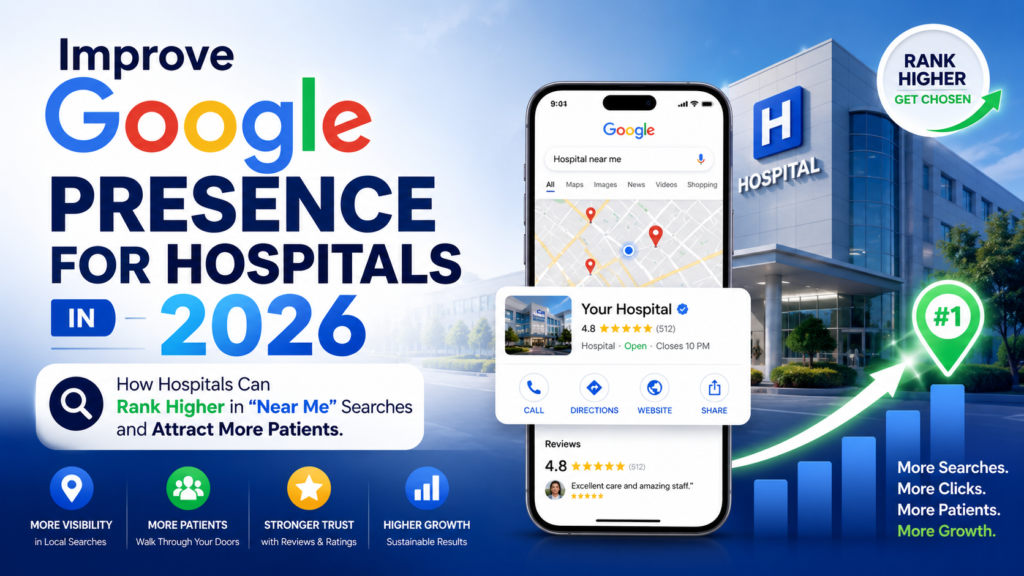
Healthcare Marketing 2026 Improve Google Presence for Hospitals in 2026 How Hospitals Can Rank Higher in “Near Me” Searches and Attract More Patients May 7, 2026 12 Min Read In 2026, healthcare decisions begin with a Google search. Patients no longer depend only on newspaper ads, referrals, or banners. Instead, they open Google and type searches like: “Best hospital near me” “Best gynecologist in Madurai” “Emergency hospital open now” “24 hours hospital nearby” “Child specialist near me” “Best maternity hospital in Madurai” If your hospital does not appear in these searches, you are losing potential patients every day. Google Presence has become one of the most important parts of healthcare marketing. A strong online presence builds trust, increases patient calls, improves walk-ins, and helps hospitals dominate local healthcare searches. This blog explains how hospitals can improve their Google Presence in 2026 using proven strategies like optimizing your Google Business Profile, collecting genuine reviews, and improving local SEO. Let’s explore each strategy in detail. Why Google Presence Matters for Hospitals Today’s patients search online before choosing a hospital or doctor. Before visiting, they check Google reviews, ratings, photos, location, opening hours, doctor availability, emergency services, and website quality. A hospital with strong Google visibility appears trustworthy and professional. When someone searches “Best gynecologist in Madurai,” Google usually shows Business Profiles, Maps listings, Reviews, and Local SEO results. If your hospital is optimized correctly, your chances of appearing in these results increase dramatically. Understanding “Near Me” Healthcare Searches “Near me” searches are location-based searches where Google shows nearby hospitals or clinics. Google uses user location, reviews, business activity, relevance, photos, website quality, and SEO signals to decide which hospitals appear first. Hospitals that actively manage their online presence rank higher. 1. Optimize Your Google Business Profile Your Google Business Profile (GBP) is your hospital’s digital front entrance. It appears on Google Maps, Local searches, Mobile searches, and Voice searches. Essential Details to Update Hospital Name: Use your exact hospital name consistently everywhere online. Address: Ensure the location is accurate on Google Maps. Phone Number: Use active numbers for Reception, Emergency, and Appointment booking. Working Hours: Mention OP timings, Emergency availability, and Holiday timings. Website Link: Add your official website. Categories: Choose accurate categories (e.g., Multispeciality hospital, Maternity hospital). Services: List all departments (Gynecology, Cardiology, Pediatrics, etc.). Why Weekly Updates Matter Google prefers active businesses. Hospitals that update weekly often perform better. Updates can include health awareness posts, doctor availability, medical camps, new equipment launches, and seasonal health tips. 2. Upload Patient-Friendly Photos Regularly Photos create confidence. Patients want to see cleanliness, infrastructure, friendly staff, modern facilities, and a comfortable environment. What Photos Should Hospitals Upload? Reception Area: Shows professionalism and cleanliness. Doctor Consultation Photos: Builds trust with specialists. ICU and Emergency Facilities: Improves emergency patient confidence. Maternity and Pediatric Areas: Important for women and family audiences. Diagnostic Equipment: Shows advanced medical capability. Tips for Better Photos: Use bright lighting, keep areas clean, use real photos instead of stock images, include smiling staff, and upload fresh photos every week. 3. Post Health Tips Regularly Educational content builds authority. Google values businesses that help users with useful information. Regular health tips improve engagement, build patient trust, and improve local SEO. Best Topics for Hospitals Seasonal Topics: Summer dehydration, Monsoon fever prevention. Women’s Health: Pregnancy care, PCOS awareness. Child Health: Vaccination reminders, Child nutrition. Emergency Care: Stroke symptoms, Heart attack warning signs. Lifestyle Topics: Diabetes prevention, Weight management. Video Content Improves Engagement In 2026, short videos dominate healthcare marketing. Upload doctor tips, awareness videos, and medical myth explanations to improve watch time and patient trust. 4. Collect Genuine Google Reviews Reviews are one of the strongest ranking factors in healthcare local SEO. Patients trust reviews more than advertisements. How to Collect Genuine Reviews Ask patients politely after successful treatment. Send WhatsApp review links to make it easy. Train front office staff to encourage feedback naturally. Place QR Codes at the reception. Follow up after discharge with thank-you messages. Never Buy Fake Reviews: Google detects them, and it can lead to profile suspension. Always collect genuine patient experiences. Respond to Every Review Replying to reviews shows professionalism and patient care. Thank positive reviewers, and offer support to negative reviewers. Professional responses improve credibility. 5. Improve Local SEO for Hospitals Local SEO helps hospitals appear in location-based searches like “Best hospital in Madurai”. Create Location-Based Pages: E.g., “Best gynecology hospital in Madurai”. Use Local Keywords: Include city names, nearby areas, and treatments. Add Schema Markup: Helps Google understand hospital type, doctor info, and reviews. Optimize Mobile Experience: Ensure your website loads fast, is mobile-friendly, and has click-to-call buttons. Additional Strategies for Success 6. Build Trust Through Consistent Branding Patients trust recognizable hospitals. Your branding should be consistent across Google, your website, Instagram, Facebook, and WhatsApp. Use the same logo, name, colors, and contact numbers. 7. Use Google Posts Effectively Google Posts appear directly inside your Business Profile. Post about Health Awareness Days (World Heart Day), Medical Camp Announcements, Doctor Introductions, and Health Packages. Aim for 3–5 posts weekly. 8. Improve Website SEO Alongside Google Profile Your GBP and website must work together. Ensure fast loading speeds, create SEO-optimized content (blogs targeting symptoms/treatments), add dedicated doctor profile pages, and use online appointment forms. 9. Use Social Media to Support Google Presence Google tracks online activity signals. Actively use Instagram, Facebook, YouTube, and WhatsApp Business. Post doctor reels, patient awareness posts, and behind-the-scenes videos. 10. Monitor Insights and Analytics Track search views, calls, direction requests, and website clicks via Google Business Profile analytics to constantly improve your marketing strategy. Common Mistakes Hospitals Must Avoid ❌ Inactive Google Profiles: No updates reduce visibility. ❌ Poor Quality Photos: Creates negative impressions. ❌ Ignoring Reviews: Patients notice inactivity. ❌ Inconsistent Contact Info: Confuses Google and patients. ❌ Slow Websites: Reduces trust and ranking. ❌ Fake Reviews: Can permanently damage reputation. Future of Healthcare Google Presence in 2026 Healthcare digital marketing is becoming more competitive. AI-powered search, voice search, and mobile search
01/16 Swipe → ← → 10 Digital Marketing Strategies PATIENT[2026] for LEADS[growth] TM Seenivasan 12 min read Hospital Marketing 2026 Swipe right → INTRO Overview Why Hospitals Need Digital Marketing Most people SEARCH ONLINE before choosing a hospital. Searches like “best hospital near me” or “ENT specialist in Madurai” happen millions of times daily. With the right digital strategies, hospitals can increase visibility, build trust, and convert online visitors into REAL PATIENTS. This guide covers 10 PROVEN STRATEGIES for consistent patient leads and sustainable hospital growth. SEO✦Google Ads✦ Maps✦Content✦ Social✦Reputation✦ Video✦Email✦ Mobile✦Landing✦ SEO✦Google Ads✦ Maps✦Content✦ Social✦Reputation✦ Video✦Email✦ Mobile✦Landing✦ Patient Leads✦Hospital Growth✦ Digital Presence✦Brand Trust✦ Appointments✦Healthcare Marketing✦ Patient Leads✦Hospital Growth✦ Digital Presence✦Brand Trust✦ Appointments✦Healthcare Marketing✦ SEO STRATEGY✦PAID ADS✦ LOCAL SEO✦CONTENT✦ SOCIAL MEDIA✦REPUTATION✦ VIDEO✦EMAIL✦ SEO STRATEGY✦PAID ADS✦ LOCAL SEO✦CONTENT✦ SOCIAL MEDIA✦REPUTATION✦ VIDEO✦EMAIL✦ Strategy 01 — Search Engine Optimization Long-term ROI / Lead Generation 01 [seo] [strategy_01] Search Engine Optimization SEO helps hospital websites appear on the first page — delivering consistent, long-term leads without ongoing ad spend. Location-based keywords matching patient search intent SEO blog content around health topics and treatments Optimized titles, meta descriptions, heading hierarchy Website speed and Core Web Vitals improvements [Local SEO] [Long-term ROI] Strategy 02 — Google Ads for Hospitals Instant Leads / Paid Advertising 02 [paid_ads] [strategy_02] Google Ads for Hospitals Run targeted ads that appear at the top of search results instantly — generating immediate patient inquiries from high-intent searchers. “Kidney hospital in Madurai” — top of results instantly “Best cardiologist near me” — capture intent searches Precise audience targeting by location and specialty Track ROI with conversion reporting [Instant Results] [Pay Per Click] Key Insight — Local Discovery Most patients SEARCH ONLINE before choosing a hospital — your visibility is your first impression. Strategy 03 — Google Maps Optimization Local SEO / Google Business Profile 03 [local_seo] [strategy_03] Google Maps Optimization A fully optimized Google Business Profile dramatically increases local patient leads and immediate trust. Accurate address, contact details, service categories High-quality photos of hospital and facilities Updated working hours and appointment links Consistent NAP across all local directories Strategy 04 — Content Marketing Trust Building / SEO Authority 04 [content] [strategy_04] Healthcare Content Marketing Educational content builds trust and improves search rankings. Patients trust hospitals that share reliable health information. Health awareness blogs and disease guides Treatment guides and procedure walkthroughs Disease prevention tips and lifestyle advice Expert doctor Q&A articles and patient FAQs Strategy 05 — Social Media Marketing Brand Awareness / Patient Engagement 05 [social] [strategy_05] Social Media Marketing Social platforms allow hospitals to reach thousands of potential patients and build brand recognition across Instagram, Facebook, and YouTube. Daily health tips and medical awareness content Patient success stories and recovery journeys Doctor introductions and specialist highlights Health campaigns and event promotions Key Insight — Reputation A strong ONLINE REPUTATION turns a satisfied patient into dozens of new referrals. Strategy 06 — Reputation Management Trust & Credibility / Patient Acquisition 06 [reputation] [strategy_06] Online Reputation Management Patients read reviews before choosing a provider. Actively managing your online reputation drives stronger patient acquisition rates. Monitor and respond to all patient reviews promptly Encourage satisfied patients to share feedback Manage presence on Google, Practo, and directories Address negative feedback professionally Strategy 07 — Video Marketing Engagement / YouTube Reach 07 [strategy_07] Video Marketing for Healthcare Video outperforms text and images on every platform — building immediate trust and extending organic reach to more patients. Doctor health advice and expert explanation videos Treatment walkthroughs and facility tours Patient testimonials and genuine success stories YouTube publishing for expanded organic discovery Strategy 08 — Email Marketing Patient Retention / Long-term Relationships 08 [email] [strategy_08] Email Marketing for Engagement Email maintains relationships with existing and potential patients at low cost — turning visitors into loyal, long-term relationships. Health tips newsletters with seasonal relevance Appointment reminders and follow-up messages Preventive health advice for patient profiles Medical awareness campaigns and event invitations Strategy 09 — Mobile Website UX & Performance / Core Web Vitals 09 [mobile] [strategy_09] Mobile-Friendly Hospital Website Most healthcare searches happen on mobile phones. A slow website loses patients before they read a single word about your services. Mobile responsive design across all screen sizes Fast loading pages — under 3 seconds target Click-to-call buttons for instant patient contact Streamlined, friction-free appointment booking [Core Web Vitals] [Mobile-First] Strategy 10 — Conversion Landing Pages Conversion Optimization / Patient Acquisition 10 [conversion] [strategy_10] Conversion Optimized Landing Pages Landing pages are built for one purpose: converting visitors into patients. Every element drives a single action toward appointment bookings. Clear, benefit-focused treatment information Doctor expertise and credentials displayed Real patient testimonials and social proof Simple, friction-free appointment booking form FINALE Final Thoughts Building a Winning Healthcare Digital Presence By combining SEO, Google Ads, social media, content marketing, and reputation management, hospitals can build a powerful online presence. Hospitals that invest in patient lead generation today will gain a sustainable competitive advantage — growing year over year. [01 SEO][02 Google Ads] [03 Maps][04 Content] [05 Social][06 Reputation] [07 Video][08 Email] [09 Mobile][10 Landing] GROW TM Seenivasan — Healthcare Digital Marketing Need More Patient Leads for Your Hospital? Let TM Seenivasan’s healthcare digital marketing team grow your brand online and bring consistent patient appointments every month. Book a Free Consult